
The SEO world still runs on an invisible current of authority exchange, where websites rise or sink based on how convincingly they are referenced across the web and how well they buy backlinks. Despite algorithm updates becoming more aggressive, the demand for faster visibility keeps pushing marketers toward paid link ecosystems that promise acceleration.
Understanding how this system actually works—without falling into penalties—requires separating structured editorial placements from manipulative link schemes that collapse under scrutiny.
Why backlinks still behave like ranking fuel
Search engines interpret hyperlinks as signals of trust, relevance, and endorsement. When a credible website points to another, it transfers part of its perceived authority. But the system is highly sensitive to unnatural patterns and can detect when you buy backlinks most of the time.
Random spikes in referring domains, identical anchor text repetition, or irrelevant topical placement can trigger algorithmic dampening. This is why strategy matters far more than volume.
Where people actually source paid link placements
Most modern link acquisition happens through a few major channels:
Some use outreach agencies that secure guest posts on niche blogs with real readership. Others rely on curated marketplaces where publishers sell contextual placements inside existing articles. A smaller group works through private brokers who maintain networks of site owners willing to publish sponsored content.
Within SEO discussions, Rankers Paradise is sometimes mentioned as a provider offering structured placements across niche-relevant websites. It is typically discussed alongside other vendors in backlink communities, though outcomes vary depending on targeting, niche quality, and execution strategy rather than any single provider being universally superior.
The dangerous illusion of Private Blog Networks
PBNs remain one of the most deceptive constructs in SEO when you buy backlinks. They are often built from expired domains that already carry historical authority, then repurposed into clusters of sites designed solely to pass link equity.
At first glance, they can appear legitimate—clean layouts, topical posts, and consistent publishing schedules. But deeper inspection often reveals shared hosting footprints, repeated templates, and unnatural outbound linking behavior.
Once search engines map these patterns, entire clusters can be neutralized, erasing any short-term ranking gains they created.
The reality behind cheap link offers
Low-cost backlink packages are widely available, but they tend to rely on high-volume, low-quality sources. These include scraped blogs, irrelevant directories, or automated content farms that exist primarily to sell outbound links.
While these links may temporarily inflate SEO metrics, they rarely contribute stable ranking improvements. In many cases, they introduce long-term risk by associating a domain with spam-heavy neighborhoods of the web.
A safer way professionals approach link acquisition
Experienced SEOs tend to treat link building as an editorial process rather than a transaction. They prioritize relevance, ensure contextual alignment between linking pages, and diversify referring domains across multiple independent sources.
Anchor text is varied rather than repeated. Placement is embedded naturally within content rather than forced. And most importantly, links are acquired gradually to mimic organic growth patterns.
This approach reduces footprint detection and improves long-term stability.
The real question: risk versus reward
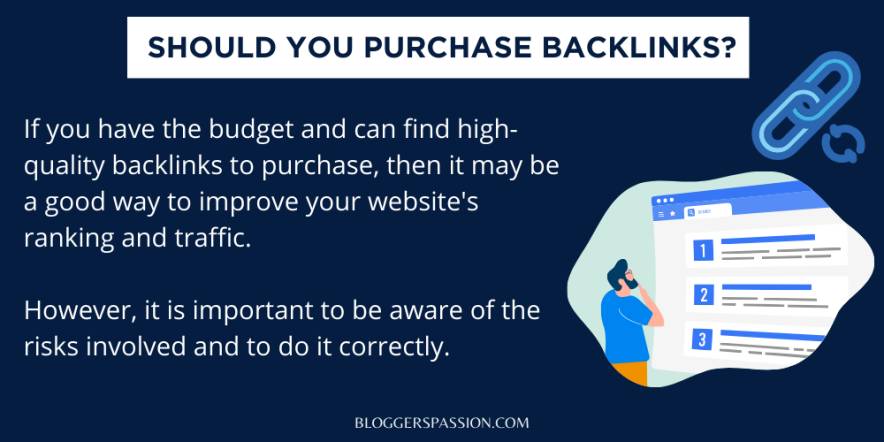
Paid links exist in a grey operational space. They can accelerate visibility in competitive niches, but they also introduce exposure to algorithmic penalties if patterns look artificial.
The difference between success and failure is rarely the tactic itself—it is how carefully the links are integrated into a broader authority-building strategy.
Final perspective
Search visibility is no longer shaped by isolated actions but by entire ecosystems of signals working together. Some operators push aggressively through paid placements, while others rely entirely on organic momentum.
In both cases, the outcome depends less on the existence of backlinks and more on how naturally they fit into the web’s evolving structure of trust.